Choosing a wedding dress involves more than finding the right silhouette. The fabric plays a major role in how a gown looks, feels, photographs, and moves throughout your wedding day. Two dresses with a similar design can create completely different impressions depending on the wedding dress fabric used.
Understanding wedding dress fabrics can help you narrow down your options, shop with confidence, and select a gown that matches your style, venue, season, and comfort preferences.
This blog explains the most popular bridal gown fabrics, how different wedding dress materials perform, and what to consider before choosing the right cloth for your wedding gown.
Understanding Wedding Dress Fabrics and Materials
Wedding dresses are made from a wide variety of fabrics, each offering unique characteristics. Some fabrics create soft movement and a romantic look, while others provide structure, volume, and a polished appearance.
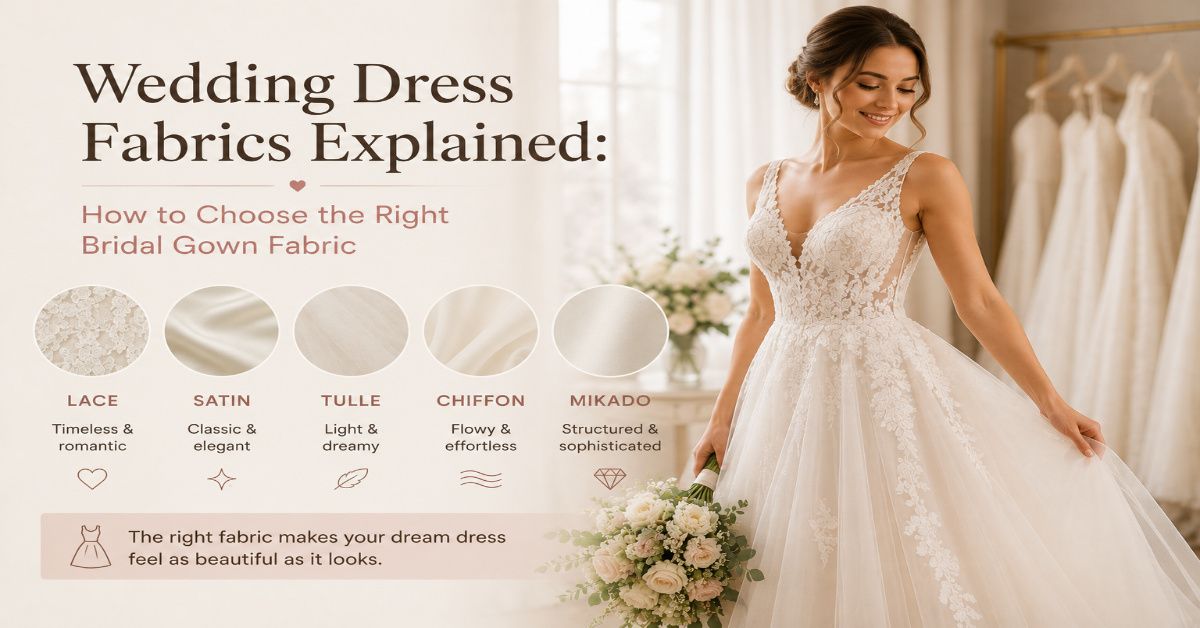
The most common wedding dress fabrics include:
-
Lace
-
Satin
-
Mikado
-
Tulle
-
Chiffon
-
Crepe
-
Organza
-
Silk
-
Taffeta
-
Brocade
The right wedding dress material depends on several factors, including your wedding location, season, desired silhouette, budget, and personal style.
What Is the Best Fabric for a Wedding Dress?
There is no single best fabric for every bride.
The best fabric for a wedding dress depends on the look and feel you want to achieve.
For example:
-
Brides seeking a classic and romantic style often choose lace.
-
Brides who want a sleek, modern appearance frequently prefer crepe.
-
Structured ball gowns often use Mikado or satin.
-
Lightweight outdoor wedding dresses commonly feature chiffon or organza.
Instead of focusing on the most popular fabric, think about how you want your dress to look, feel, and function throughout your wedding day.
How to Choose the Right Cloth for a Wedding Gown
Selecting the right cloth for a wedding gown becomes much easier when you focus on a few key factors.
Consider Your Wedding Dress Style
Different wedding gown fabrics work better with specific silhouettes.
-
Ball gowns often use Mikado, satin, or taffeta for structure.
-
A-line dresses work well with lace, satin, chiffon, and organza.
-
Mermaid gowns often feature crepe, satin, or lace.
-
Sheath dresses typically use crepe, silk, or chiffon for a softer drape.
The fabric should support the overall design rather than compete with it.
Think About the Season
Wedding dress materials should match the weather and venue.
For spring and summer weddings, lightweight fabrics usually provide greater comfort:
-
Chiffon
-
Organza
-
Tulle
-
Lightweight lace
For fall and winter weddings, heavier fabrics can offer more structure and warmth:
-
Satin
-
Mikado
-
Brocade
-
Taffeta
Consider Comfort and Movement
Your wedding day involves hours of standing, walking, dancing, and celebrating.
Soft fabrics such as chiffon, silk, and crepe offer flexibility and ease of movement. Structured fabrics like Mikado and brocade create dramatic shapes but can feel heavier.
When comparing wedding dress fabrics, always consider how the gown feels in addition to how it looks.
Balance Style and Budget
Wedding dress material can significantly affect price.
Luxury fabrics such as pure silk typically cost more, while polyester blends often provide a similar appearance at a lower price point.
A beautiful wedding dress does not have to feature the most expensive fabric. Quality construction and fit are often just as important as the material itself.
Consider Wrinkle Resistance and Durability
If you are traveling for your wedding, fabric durability becomes especially important.
Crepe, Mikado, and many polyester blends tend to resist wrinkles better than fabrics such as chiffon, organza, and pure silk.
This can be a valuable consideration for destination weddings and outdoor celebrations.
Check: Groom Tuxedo Ideas
Most Popular Wedding Dress Fabric Types
The table below highlights some of the most common wedding dress fabric types and where they work best.
|
Fabric |
Look & Feel |
Best For |
Best Season |
|---|---|---|---|
|
Lace |
Romantic, detailed, timeless |
Almost any silhouette |
All seasons |
|
Satin |
Smooth, elegant, luxurious |
Formal gowns, mermaid dresses |
Fall, winter |
|
Mikado |
Structured, sophisticated |
Ball gowns, A-line dresses |
Fall, winter |
|
Tulle |
Light, airy, ethereal |
Full skirts, overlays |
All seasons |
|
Chiffon |
Soft, flowing, lightweight |
Outdoor and beach weddings |
Spring, summer |
|
Crepe |
Clean, modern, sleek |
Minimalist styles |
All seasons |
|
Organza |
Lightweight with structure |
Statement skirts and sleeves |
Spring, summer |
|
Silk |
Luxurious and versatile |
Premium bridal gowns |
All seasons |
|
Taffeta |
Crisp and dramatic |
Formal weddings |
Fall, winter |
|
Brocade |
Rich texture and structure |
Traditional weddings |
Cooler seasons |
Wedding Dress Fabrics at a Glance
Best Fabrics for Summer Weddings
Warm-weather weddings often call for breathable, lightweight materials.
Good options include:
-
Chiffon
-
Organza
-
Tulle
-
Lightweight lace
-
Crepe
These fabrics help brides stay comfortable without sacrificing style.
Best Fabrics for Winter Weddings
Cooler temperatures pair well with richer, heavier fabrics.
Popular choices include:
-
Satin
-
Mikado
-
Brocade
-
Taffeta
-
Heavier lace
These materials provide structure while complementing formal winter wedding settings.
Best Fabrics for Structured Wedding Dresses
If you love dramatic silhouettes, look for fabrics that hold their shape.
Popular choices include:
-
Mikado
-
Satin
-
Brocade
-
Taffeta
These fabrics work particularly well for ball gowns and structured A-line dresses.
Best Fabrics for Soft and Flowing Wedding Dresses
For a relaxed and effortless appearance, softer fabrics often perform best.
Consider:
-
Chiffon
-
Crepe
-
Silk
-
Georgette
These fabrics create natural movement and photograph beautifully.
Also Check: Wedding Gown Shopping Tips
Best Wedding Dress Fabrics for Las Vegas Weddings
Las Vegas weddings often combine warm weather, destination travel, and a variety of venue styles.
For outdoor ceremonies and warmer months, brides frequently prefer:
-
Chiffon
-
Crepe
-
Organza
-
Lightweight lace
For luxury hotel venues and formal evening celebrations, structured fabrics can create a more dramatic look:
-
Satin
-
Mikado
-
Taffeta
Many brides planning destination weddings also prioritize fabrics that travel well and resist wrinkles.
Comparing different materials in person through bridal gown rental services in Las Vegas can help brides better understand how fabrics look and feel before making a final decision.
Also Check: Wedding Dress Styles by Body Type
Which Wedding Dress Fabrics Wrinkle the Least?
Wrinkles are a common concern, especially for destination weddings.
Some of the most wrinkle-resistant wedding dress fabrics include:
-
Mikado
-
Crepe
-
Polyester blends
-
Certain satin blends
Fabrics that tend to wrinkle more easily include:
-
Chiffon
-
Organza
-
Pure silk
If your gown will be transported by plane or stored for several hours before the ceremony, wrinkle resistance may be worth considering.
Why Seeing Fabric in Person Matters
Fabric descriptions can only tell part of the story.
The way a fabric feels, drapes, and moves often becomes clear only when you see it in person. Many brides discover that a fabric they loved online feels very different once they try it on.
Exploring designer wedding dress collections in Las Vegas can make it easier to compare fabric options side by side and identify the styles that best match your wedding vision.
A professional bridal fitting appointment in Las Vegas can also help you understand how different fabrics complement your body shape and preferred silhouette.
Also Check: What Is a Tea Length Dress?
Final Thoughts
Wedding dress fabrics influence everything from comfort and movement to structure and overall style. Understanding the differences between wedding dress materials can help you make a more confident decision and find a gown that feels as beautiful as it looks.
Whether you prefer the romance of lace, the elegance of satin, the structure of Mikado, or the effortless movement of chiffon, taking the time to compare fabrics will make your wedding dress shopping experience far more enjoyable.
For brides planning a Las Vegas wedding, exploring wedding gown rental options in Las Vegas and scheduling a bridal fitting appointment can provide valuable hands-on experience with different fabrics, helping you find the perfect gown for your celebration.
FAQs About Wedding Dress Fabrics
Wedding dresses are commonly made from lace, satin, Mikado, chiffon, tulle, crepe, organza, silk, and other specialty fabrics. Many gowns combine multiple materials to achieve a specific look and feel.
Lace remains one of the most popular bridal gown fabrics because of its versatility, timeless appeal, and ability to work with almost any silhouette.
Satin typically has a smoother, glossier finish and softer drape. Mikado offers more structure and shape while maintaining a luxurious appearance.
Chiffon, organza, lightweight lace, and crepe are among the best fabrics for warm-weather weddings because they are breathable and lightweight.
Crepe, Mikado, and wrinkle-resistant blends are often preferred for destination weddings because they travel well and require less maintenance.