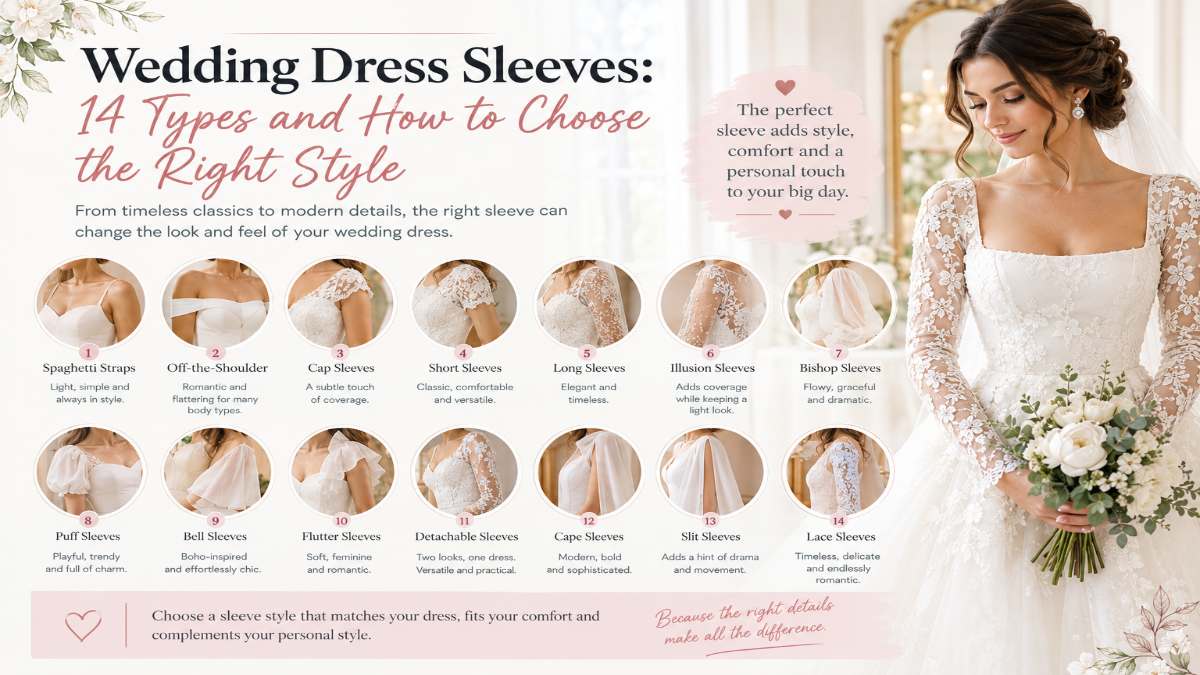
Wedding dress sleeves can change the entire look of a gown. A fitted long sleeve can make the same dress feel formal and refined, while a flutter or bishop sleeve can make it softer and more romantic.
Sleeves also affect coverage, movement, comfort and how the dress works with the neckline and fabric.
If you are comparing wedding dresses, understanding the main sleeve styles can make it easier to identify what you actually want before your fitting.
What Are the Different Types of Wedding Dress Sleeves?
Wedding dress sleeves vary by length, shape, volume and construction.
The most common bridal sleeve styles include:
-
Cap sleeves
-
Short sleeves
-
Flutter sleeves
-
Three-quarter sleeves
-
Fitted long sleeves
-
Illusion sleeves
-
Bishop sleeves
-
Bell sleeves
-
Puff sleeves
-
Balloon sleeves
-
Off-the-shoulder sleeves
-
Detachable sleeves
-
Convertible sleeves
-
Juliet sleeves
Many gowns combine more than one of these styles. For example, a long sleeve may also be made from illusion tulle, while a detachable sleeve can have a puff, bishop or lace design.
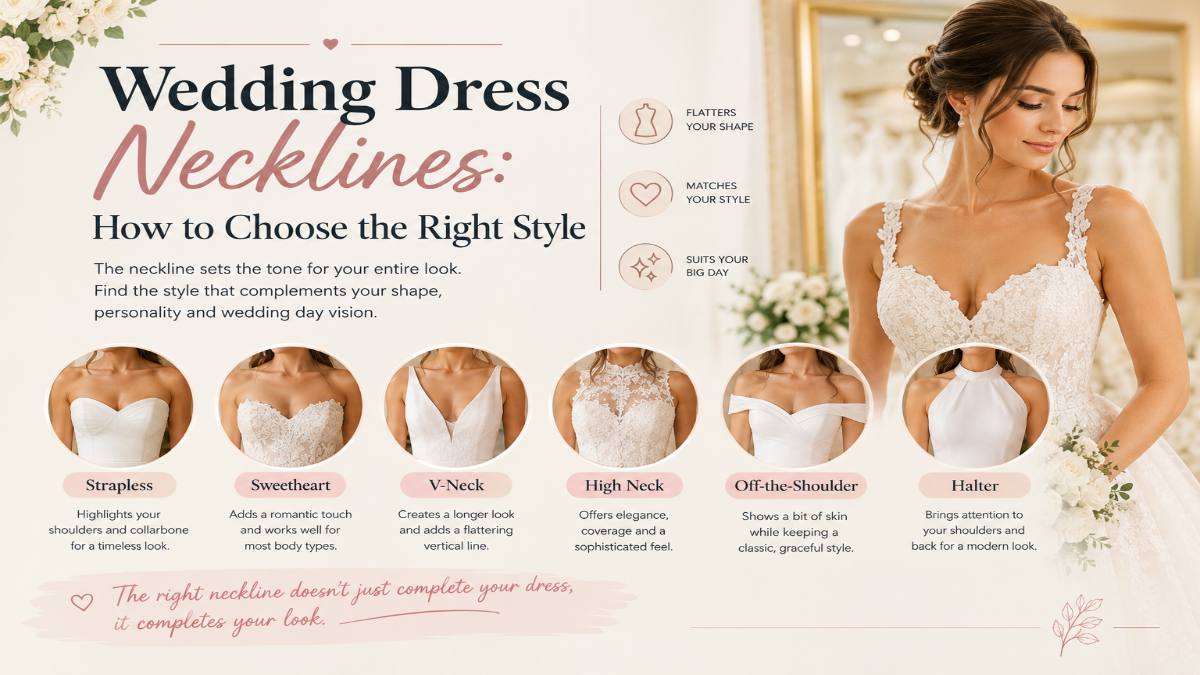
Check: Wedding Dress Necklines
Cap Sleeve Wedding Dresses
Cap sleeves are very short sleeves that cover the top of the shoulder and extend only a short distance down the upper arm.
They provide a small amount of coverage without adding much visual weight to the gown.
Cap sleeves can be made from:
-
Lace
-
Tulle
-
Satin
-
Crepe
-
Embroidered fabric
They work particularly well when you like the appearance of a sleeveless dress but want some shoulder coverage.
Because cap sleeves end high on the upper arm, pay attention to where the sleeve edge sits. A different sleeve length or softer fabric may create a better fit depending on your arm and shoulder proportions.
Short Sleeve Wedding Dresses
Short sleeves extend farther down the upper arm than cap sleeves.
They can be fitted, slightly loose, gathered or made from lace or lightweight fabric.
Short sleeves are a practical choice if you want more arm coverage without moving to a full-length sleeve.
They can work with:
-
A-line wedding dresses
-
Tea-length gowns
-
Sheath dresses
-
Ball gowns
-
Simple wedding dresses
-
Lace wedding dresses
A fitted short sleeve should allow you to raise your arms without pulling against the bodice or restricting movement.
Flutter Sleeve Wedding Dresses
Flutter sleeves are loose, lightweight sleeves that flare away from the shoulder or upper arm.
They are commonly made from soft fabrics such as chiffon, tulle or lightweight lace so the sleeve moves as you walk.
Flutter sleeves can give a wedding dress a softer, relaxed appearance without adding the structure of a fitted sleeve.
They can be particularly useful when you want:
-
Light arm coverage
-
A softer shoulder line
-
More movement in the sleeve
-
A romantic or relaxed bridal look
Three-Quarter Sleeve Wedding Dresses
Three-quarter sleeves finish between the elbow and wrist.
They provide more coverage than a short sleeve while leaving part of the lower arm exposed.
This sleeve length can work particularly well with:
-
Lace wedding dresses
-
Vintage-inspired gowns
-
Structured bridal dresses
-
Tea-length dresses
-
Classic silhouettes
The exposed wrist can also make it easier to wear a bracelet or other wrist jewelry without covering it with fabric.
Fitted Long Sleeve Wedding Dresses
Fitted long sleeves follow the shape of the arm from the shoulder toward the wrist.
They can be made from solid fabric, lace, stretch material or other bridal fabrics.
Long sleeves can give a gown a polished and formal appearance, but fit is especially important. A sleeve that is too tight at the upper arm or elbow can become uncomfortable when you move.
When trying a long-sleeve gown, bend your arms, raise them and reach forward. The sleeve should allow natural movement rather than pulling across the elbow or shoulder.
Illusion Sleeve Wedding Dresses
Illusion sleeves use sheer fabric, commonly illusion tulle or mesh, to create the appearance of coverage without the visual weight of a solid sleeve.
Lace, embroidery or beading can be applied over the sheer fabric.
Illusion sleeves can be:
-
Cap length
-
Short
-
Three-quarter
-
Full length
-
Detachable
They are particularly useful when you want the appearance of a long sleeve while keeping the overall gown visually light.
Because illusion fabric is delicate, check the construction carefully and avoid assuming that every illusion sleeve will provide the same level of support or coverage.
Bishop Sleeve Wedding Dresses
Bishop sleeves are fuller through the arm and gather into a cuff near the wrist.
The amount of volume can vary considerably. A lightweight chiffon bishop sleeve may drape softly, while a heavier or more structured fabric can create a fuller shape.
Bishop sleeves can give a gown a:
-
Romantic appearance
-
Vintage influence
-
Bohemian feel
-
Soft, flowing silhouette
The cuff should feel secure without being restrictive. Since the sleeve gathers at the wrist, check that you can comfortably move your hands and wrists.
Bell Sleeve Wedding Dresses
Bell sleeves are fitted or narrower near the upper arm and flare outward toward the wrist.
The flare can be subtle or dramatic.
Lace bell sleeves often create a vintage or bohemian appearance, while simpler fabrics can make the same shape feel more modern.
Because the lower sleeve is wider, consider how it behaves when you sit, hold a bouquet or move your arms.
Puff Sleeve Wedding Dresses
Puff sleeves create volume around the shoulder or upper arm before becoming narrower farther down the arm.
The amount of volume can range from a small rounded detail to a much more dramatic statement sleeve.
Puff sleeves can add visual interest to a relatively simple gown and work particularly well when you want the sleeve to become a noticeable part of the bridal look.
The rest of the dress does not necessarily need to be elaborate. A simple silhouette can allow a structured puff sleeve to become the main design feature.
Balloon Sleeve Wedding Dresses
Balloon sleeves have a rounded, fuller shape through much of the sleeve and may narrow toward the wrist or cuff.
They are generally more voluminous than a standard fitted sleeve.
The fabric makes a significant difference. Lightweight materials create softer volume, while structured fabrics create a more defined shape.
If you like the look of a dramatic sleeve, check how much space it takes up when your arms are at your sides and when you move.
Off-the-Shoulder Wedding Dress Sleeves
Off-the-shoulder sleeves sit below the natural shoulder line, leaving the shoulders and collarbone exposed.
They can be fitted closely to the arm or designed with softer, looser fabric.
This style can create a romantic appearance and works well with:
-
Ball gowns
-
A-line dresses
-
Fit-and-flare gowns
-
Lace wedding dresses
-
Satin gowns
Movement is the main practical consideration. Raise your arms and sit down to make sure the sleeve does not become restrictive or move out of position.
Detachable Wedding Dress Sleeves
Detachable sleeves are designed to be removed from the gown rather than permanently sewn into it.
Depending on the dress, they may attach with:
-
Hooks
-
Snaps
-
Buttons
-
Loops
-
Other concealed fastenings
They allow you to change the appearance of the gown without changing into an entirely different dress.
For example, you could wear long lace sleeves for the ceremony and remove them for the reception.
Detachable sleeves can also be useful when you want to compare a sleeved and sleeveless version of the same gown.
Convertible Wedding Dress Sleeves
Convertible sleeves are designed to be repositioned or changed rather than simply removed.
A convertible sleeve might allow you to change from a cap-sleeve appearance to an off-the-shoulder style, depending on its construction.
This can give you more than one look from the same gown.
Before choosing a convertible design, test the fastening and movement. The sleeve should remain secure in each position you plan to wear.
Juliet Sleeve Wedding Dresses
Juliet sleeves have volume around the upper arm or shoulder and become narrower toward the forearm or wrist.
The shape is associated with romantic and historical-inspired bridal styling.
They can be particularly effective with:
-
Lace
-
Tulle
-
Romantic A-line gowns
-
Ball gowns
-
Vintage-inspired wedding dresses
The amount of upper-arm volume varies, so compare different versions if you like the style but are unsure about how dramatic you want the sleeve to be.
Check: Different Wedding Dress Styles
Which Wedding Dress Sleeves Are Best for Different Levels of Coverage?
Sleeve length is one of the easiest ways to narrow down your options.
|
Coverage you want |
Sleeve styles to consider |
|
Minimal shoulder coverage |
Cap sleeves |
|
Light upper-arm coverage |
Flutter, short sleeves |
|
Moderate arm coverage |
Three-quarter sleeves |
|
Full arm coverage |
Long, fitted or illusion sleeves |
|
Full coverage with more volume |
Bishop, balloon or bell sleeves |
|
Shoulder coverage only |
Off-the-shoulder or cap sleeves |
|
Changeable coverage |
Detachable or convertible sleeves |
Coverage is only part of the decision. Fabric, sleeve width and construction can make a full-length sleeve feel very different from another full-length sleeve.
Also Read: Wedding Dress Styles by Body Type
How to Choose Wedding Dress Sleeves for Your Body Shape
There is no sleeve style that every bride with a particular body shape should wear.
Instead, look at where the sleeve adds width or creates a visual line.
A fitted sleeve follows the arm closely, while puff, balloon and bishop sleeves introduce more volume.
If you want to:
-
Keep the arm line simple: Try fitted or illusion sleeves.
-
Add softness around the shoulder: Try flutter or off-the-shoulder sleeves.
-
Add noticeable volume: Try puff, balloon or bishop sleeves.
-
Keep the look light: Try cap or illusion sleeves.
-
Create a more dramatic silhouette: Try bell or bishop sleeves.
Try different sleeve shapes with the same dress silhouette before deciding what works best for you.
How to Choose Wedding Dress Sleeves for the Season
The season can influence sleeve choice, but it should not be the only deciding factor.
Summer Weddings
Lightweight fabrics, flutter sleeves, cap sleeves and sheer illusion sleeves can provide some coverage without adding as much visual or physical weight.
For a warm outdoor wedding, also consider how much of the sleeve is made from solid fabric.
Winter Weddings
Long sleeves, lace sleeves, fitted sleeves and fuller bishop styles can provide more coverage.
However, a long sleeve does not automatically make a gown warm. Fabric weight and whether you will spend time outdoors matter too.
Spring and Fall Weddings
These seasons offer more flexibility. Three-quarter sleeves, illusion sleeves, lace sleeves and detachable styles can provide coverage without committing to a fully covered gown.
How to Choose Wedding Dress Sleeves for Your Venue
The venue can influence the formality and practicality of your sleeve choice.
Church or Religious Ceremony
If your ceremony has specific modesty requirements, check them before choosing the gown.
Long, three-quarter, cap or illusion sleeves may provide additional coverage depending on the requirements.
Detachable sleeves can also be useful when the ceremony and reception have different dress expectations.
Outdoor Wedding
Movement and weather matter more outdoors.
Loose flutter sleeves may move more in wind, while very full sleeves can become cumbersome when walking or taking photographs.
Formal Ballroom Wedding
Fitted long sleeves, illusion lace sleeves, bishop sleeves and structured puff sleeves can all work with formal gowns, depending on the silhouette and fabric.
Beach or Destination Wedding
Lightweight sleeves can be easier to manage in warm weather and while moving outdoors.
Flutter, cap and lightweight illusion sleeves can provide detail without making the gown feel overly heavy.
How Do Wedding Dress Sleeves Affect Movement?
A sleeve should look good when your arms are down and still work when you move.
Before choosing a gown, test the sleeve by:
-
Raising both arms
-
Bending your elbows
-
Reaching forward
-
Hugging someone
-
Holding a bouquet
-
Sitting down
-
Walking
-
Moving as though you are dancing
Pay particular attention to fitted long sleeves and off-the-shoulder designs because the sleeve construction can affect how freely the arms move.
If a sleeve looks beautiful but you keep thinking about how it feels, it may not be the right choice for a full wedding day.
Which Fabrics Work Best for Wedding Dress Sleeves?
The fabric can completely change the appearance of the same sleeve shape.
|
Sleeve style |
Fabrics commonly suited to the style |
|
Fitted long sleeve |
Lace, crepe, stretch fabric |
|
Illusion sleeve |
Illusion tulle, mesh, lace |
|
Bishop sleeve |
Chiffon, lightweight lace, soft flowing fabrics |
|
Flutter sleeve |
Chiffon, tulle, lightweight lace |
|
Puff sleeve |
Organza, tulle, satin and structured fabrics |
|
Bell sleeve |
Lace, chiffon, flowing fabrics |
|
Cap sleeve |
Lace, tulle, satin, crepe |
|
Detachable sleeve |
Lace, tulle, chiffon, organza |
This is not a strict rule. The same sleeve can be constructed in different fabrics to create very different results.
Can Wedding Dress Sleeves Be Added to a Dress?
In some cases, sleeves can be added to a wedding dress, but it depends on the gown’s construction.
An alterations professional needs to consider:
-
The neckline
-
Shoulder construction
-
Armhole
-
Fabric
-
Bodice structure
-
Lace or embellishment placement
-
Weight of the added sleeve
A lightweight cap sleeve may require a very different alteration from a full lace or bishop sleeve.
If you are renting a wedding dress, ask about available alterations and whether sleeve changes are permitted before planning to modify the gown.
Also Check: Wedding Dress Shopping Tips
How to Choose the Right Wedding Dress Sleeves
Start with the amount of coverage and movement you want rather than choosing a sleeve only because it looks good in a photograph.
When trying on a gown, ask:
-
How much of my arm do I want covered?
-
Does the sleeve feel comfortable?
-
Can I move my arms normally?
-
Does the sleeve work with the neckline?
-
Does the fabric suit the sleeve shape?
-
Does it work with my wedding venue?
-
Will I be comfortable wearing it for several hours?
-
Do I prefer a fixed sleeve or a removable option?
If you are comparing wedding dresses in person, try different sleeve styles with similar silhouettes. This makes it easier to tell whether you prefer the actual sleeve or simply the overall styling of the photograph.
For a rental gown, the available dress, size and fit should ultimately guide the decision. A sleeve style may look ideal online but feel completely different once you move in the actual gown.
FAQs About Wedding Dress Sleeves
Common wedding dress sleeve styles include cap, short, flutter, three-quarter, long, illusion, bishop, bell, puff, balloon, off-the-shoulder, detachable and convertible sleeves. Many gowns combine more than one style.
Lightweight cap, flutter and illusion sleeves can provide coverage without the weight of a heavy solid sleeve. The fabric matters as much as the sleeve length, particularly for an outdoor wedding in warm weather.
Sometimes. Whether sleeves can be added depends on the gown's construction, neckline, armhole, fabric and embellishments. Detachable sleeves can also provide an alternative when you want the option to wear the gown sleeveless later.
They can be, provided the sleeve fits correctly and allows natural movement. Check the fit at the upper arm, elbow and wrist, and raise and bend your arms before deciding. Fabric choice also affects how comfortable a long sleeve feels.
They can be useful if you want different looks for the ceremony and reception without changing the entire gown. They are also worth considering when you want additional coverage for part of the wedding but prefer a sleeveless or open-shoulder look later.